05 May, 2026
Optical and Fiber Optic Calibration: The Foundatio



Electrical measurements underpin almost every industry in Qatar. From the voltage supplied to industrial equipment to the insulation resistance of a cable buried underground, accurate electrical measurement is essential for safety, efficiency and compliance. Electrical calibration ensures that the instruments making these measurements are telling the truth.
What Is Electrical Calibration?
Electrical calibration is the process of verifying and adjusting electrical measuring instruments against traceable reference standards. It covers instruments that measure voltage, current, resistance, capacitance, inductance, frequency and power — as well as instruments used to test the safety of electrical installations and equipment.
Why Electrical Instruments Drift
Electronic components age. Resistors change value with temperature and humidity. Reference voltages inside calibrators shift over time. Physical connectors corrode. Even the best instruments — multimeters, calibrators, insulation testers, oscilloscopes — will gradually drift from their original specification unless they are regularly checked against a known standard. The rate of drift depends on the instrument quality, usage frequency and environmental conditions. In Qatar's climate, where temperatures and humidity are extreme, instruments used outdoors or in uncontrolled environments can drift faster than the manufacturer's rated intervals suggest.
Key Electrical Instruments That Need Calibration
The range of electrical instruments requiring regular calibration is broad:
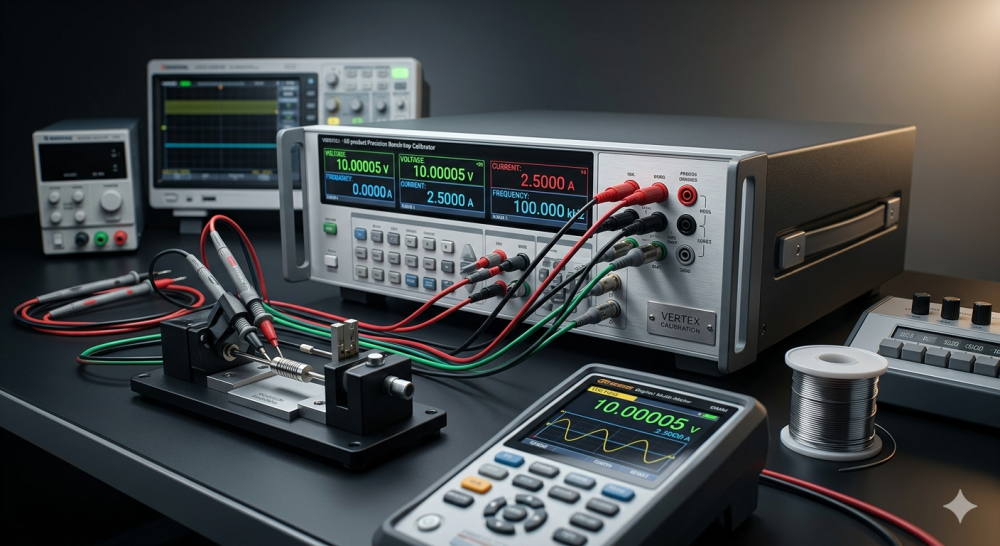
Multifunction and Process Calibrators
These are the reference tools used to calibrate other instruments. They must themselves be calibrated regularly to maintain the integrity of the calibration chain.
Digital Multimeters (DMMs)
Used in every electrical workshop and laboratory, multimeters measure voltage, current and resistance. A multimeter reading 230V when the true value is 235V is an instrument that cannot be trusted.
Insulation Resistance Testers (Megohmmeters)
Used to verify the integrity of cable insulation, these instruments are critical for electrical safety. An inaccurate insulation tester could pass a failing cable — creating a fire or electrocution risk.
PAT Testers
Portable Appliance Testing equipment verifies the safety of electrical appliances. Calibration ensures that the pass/fail thresholds are accurate and that safety certificates issued are valid.
HiPot and High Voltage Testers
Used for dielectric withstand testing up to 40 kV DC and 28 kV AC, these instruments operate in safety-critical applications and must be precisely calibrated.
Clamp Meters and Current Probes
Used to measure current in live conductors, clamp meters must be calibrated to ensure accurate readings — particularly in power monitoring and energy management applications.
Oscilloscopes
Used for waveform analysis and signal characterisation, oscilloscopes require calibration to ensure their time base and amplitude measurements are accurate.
Electrical Safety and the Importance of Calibration
Qatar's electrical safety regulations, and international standards such as IEC 60364 and IEC 61010, require that instruments used in safety-critical measurements are calibrated and traceable. For organisations holding ISO 9001, ISO 14001 or ISO 45001 certifications, maintaining calibrated instruments is a mandatory requirement. A single uncalibrated instrument in a safety test environment can invalidate the entire test programme — and expose the organisation to regulatory and legal liability.
A2LA Accredited Electrical Calibration at Vertex
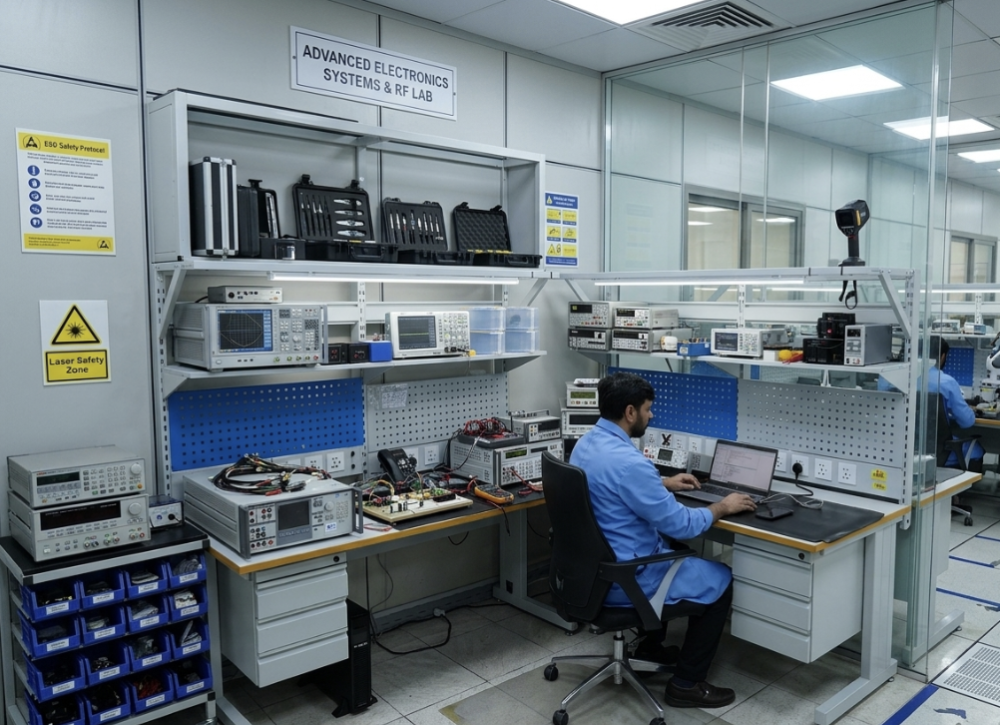
Vertex Calibration holds A2LA accreditation (Certificate No. 7399.01) for electrical calibration across a comprehensive range of parameters including DC and AC voltage up to 1000V, current up to 1000A, resistance, capacitance, inductance, frequency from 1 Hz to 225 MHz, and high voltage measurement up to 40 kV DC and 28 kV AC. We calibrate multifunction calibrators, multimeters, clamp meters, insulation testers, PAT testers, HiPot testers, oscilloscopes, power supplies, relay test sets and many more instruments — in our laboratory and on-site across Qatar.
Conclusion
Electrical calibration is the foundation of safe and reliable electrical measurement. Whether you are testing the safety of a portable appliance, verifying the output of a high voltage test set or checking the accuracy of a process calibrator, the validity of your results depends entirely on the calibration status of your instruments. Vertex Calibration is your A2LA accredited partner for electrical calibration in Qatar.
© Copyright 2026 -Vertex. All Right Reserved
Made with by Weblanza